- Unchained Daily
- Posts
- BTC Replaces Fiat in the World’s Most Watched Transactions
BTC Replaces Fiat in the World’s Most Watched Transactions
Plus: 🤨BTC community picks apart NYT’s Satoshi report 🚀 Morgan Stanley’s BTC ETF reaches the 1% 📉 BTC price drops as ceasefire falters

Laura Shin
April 09, 2026

Hi! In today’s edition:
🛢️ Iran moves to charge oil tankers in bitcoin at the Strait of Hormuz, testing crypto as a real-world geopolitical payment rail amid a fragile ceasefire
🕵️ The New York Times points to Adam Back as Satoshi using stylometric analysis, but lacks cryptographic proof — and the community isn’t buying it
🏦 Morgan Stanley launches the lowest-fee spot bitcoin ETF in the U.S., aiming to unlock its massive advisor network and capture billions in inflows
📉 Bitcoin drops below $71K as cracks emerge in the Iran ceasefire, oil rebounds, and macro uncertainty tightens risk appetite
Today’s newsletter is brought to you by Nexo!
Unlock Exclusive Rates with Nexo

Rates, product availability, features, and applicable terms may vary based on jurisdiction, eligibility, loyalty tier, and other factors, and are subject to change at any time.
Nexo is a premier digital wealth platform offering:
crypto yield up to 15% (based on stated annual interest rates)
crypto-backed credit lines from 1.9%
a wide range of digital assets.
Join today and get 30-day access to exclusive rates.

Iran Turns Bitcoin Into a Tollbooth at the World's Most Critical Oil Chokepoint
During the fragile two-week U.S.-Iran ceasefire, Tehran announced it would charge shipping companies $1 per barrel of oil to cross the Strait of Hormuz — and it wants payment in bitcoin. The directive came from Hamid Hosseini of Iran's Oil, Gas and Petrochemical Products Exporters' Union, who told the Financial Times that tankers must email cargo details to Iranian authorities, then have seconds to settle in crypto. A fully loaded supertanker could owe nearly $2 million per crossing.
The arrangement makes bitcoin, for the first time, a required payment mechanism at a chokepoint handling roughly 20% of global oil and LNG supply. The White House said the ceasefire depends on the strait being open "without limitation, including tolls" — but Tehran has since claimed three ceasefire clauses were violated. As of Thursday, the strait remained largely closed.
This isn't improvised. Blockchain analytics firm TRM Labs documented how the IRGC has already routed roughly $1 billion through stablecoin infrastructure to dodge sanctions. The Hormuz bitcoin toll is the latest chapter.
The NYT Says It Found Satoshi. Bitcoiners Aren’t Buying It.
The New York Times published a 12,000-word investigation Wednesday naming Adam Back — British cryptographer, Hashcash inventor, and Blockstream CEO — as the most credible Satoshi Nakamoto candidate yet. Reporter John Carreyrou, best known for exposing Theranos, spent a year analyzing 134,308 posts from three Cypherpunk mailing lists. Three separate stylometric analyses named Back the closest linguistic match to Satoshi's white paper. Back denied it six times in a two-hour El Salvador interview and again on X: "I'm not satoshi."
The crypto community was largely unimpressed. " The open-source code I can find written by Adam Back and Satoshi Nakamoto don't look remotely similar,” tweeted cybersecurity researcher Robert Graham. The investigation's own linguist, Florian Cafiero, called the stylometric results "inconclusive," with Hal Finney nearly tying for the top match.
Back's co-respondent critics pointed to a more fundamental gap: no cryptographic proof. No movement of Satoshi's 1.1 million BTC, worth roughly $78 billion. Until someone signs with those keys, the mystery stays unsolved — and so does the debate over whether solving it would even be good for bitcoin.
Morgan Stanley Enters the Bitcoin ETF Arena with the Cheapest Fund on the Market
Morgan Stanley launched its spot bitcoin ETF on Wednesday, and it came out swinging on price. The fund, trading under the ticker MSBT on NYSE Arca, drew roughly $34 million in net inflows and more than 1.6 million shares traded on its first day — a debut Bloomberg ETF analyst Eric Balchunas called "top 1% of ETF launches." The key differentiator: a 0.14% expense ratio, undercutting BlackRock's IBIT by 11 basis points and making MSBT the cheapest spot bitcoin ETF in the U.S. market.
The pricing is strategic. Morgan Stanley manages roughly $6–8 trillion in client assets through approximately 16,000 financial advisors, and the low fee removes any conflict-of-interest friction that might have made those advisors reluctant to recommend MSBT over competitors. Balchunas projects MSBT could reach $5 billion in assets under management within its first year.
The fund isn't the firm's only crypto move. Morgan Stanley has also filed for Ethereum and Solana ETFs, and launched direct spot crypto trading via E*Trade — positioning MSBT as one piece of a broader institutional digital-asset push, not a standalone bet.
A Double Header Livestream: Bits + Bips and Unchained
At 12pm ET, Steven Ehrlich interviews Kavita Gupta of Delta Blockchain Fund, and Laura interviews James Seyffart of Bloomberg Intelligence about Morgan Stanley’s Bitcoin ETF debut!
Bitcoin Slips Under $71K as the Iran Ceasefire Shows Its Cracks
Wednesday's ceasefire rally didn't last 48 hours. By Thursday morning, Iranian Parliament Speaker Mohammad Bagher Ghalibaf said three clauses of the deal had been violated. The Strait of Hormuz remained effectively closed to normal tanker traffic despite the agreement, and Brent crude rebounded approximately 2% to around $97 — after a more-than-10% plunge the day before, its worst single-day drop in six years. Bitcoin slipped to $70,981, down 0.5% over 24 hours.
The rest of the market followed. Ether fell 2.6% to $2,180. Solana dropped 3.1%, XRP lost 3%, and dogecoin slid 3.4%. Analysts at QCP Capital had warned Wednesday that the ceasefire was "a pause rather than a durable settlement." That read looks prescient.
The macro overlay isn't helping. Central banks are holding rates higher for longer amid what some analysts are calling "uncoordinated tightening." Between that and a fraying ceasefire, the risk-on window that opened Tuesday is already narrowing. Bitcoin is still up 6.1% on the week — the question is whether it can hold those gains through a weekend of uncertain diplomacy.

🏛️ The U.S. Treasury's FinCEN and OFAC jointly proposed rules that would require stablecoin issuers to operate bank-style AML and sanctions compliance programs under the GENIUS Act, including the technical ability to freeze, block, and reject flagged transactions. The proposal opens a 60-day public comment period and sets a final enforcement deadline of January 2027.
⚖️ The CFTC and Justice Department asked a federal court to block Arizona from applying its gambling laws to prediction market operator Kalshi, arguing its sports event contracts qualify as federally regulated swaps under the Commodity Exchange Act. Arizona has filed criminal charges against Kalshi with an arraignment scheduled for April 13, setting up a direct clash over whether states or the federal government controls prediction markets.
🔒 Lightning Labs CTO Olaoluwa "Roasbeef" Osuntokun unveiled a working prototype of a quantum-resistant wallet rescue tool that would allow Bitcoin users to prove ownership of their wallets without exposing their private seed, addressing a key gap in Bitcoin's quantum contingency plans. The prototype runs on consumer-grade hardware, generating a proof in about 55 seconds, though no formal path to Bitcoin adoption has been proposed yet.
🔒 North Korean IT workers were exposed by a counter-hacker who accessed the devices of a DPRK unit that earned more than $3.5 million in just a few months by faking developer identities and applying for remote tech jobs. The leaked data, shared by blockchain sleuth ZachXBT, revealed a 140-person operation coordinating crypto payments through a shared server protected by the password "123456."
⚖️ Yuga Labs settled its long-running trademark lawsuit against artist Ryder Ripps and Jeremy Cahen over their RR/BAYC NFT collection, permanently barring the pair from using Bored Ape imagery or trademarks. Financial terms were not disclosed, and the settlement avoids a jury trial that would have determined whether buyers were actually misled.
🟡 Circle launched the Circle Payments Network (CPN), a new institutional payments infrastructure designed to connect financial institutions, fintechs, and digital asset platforms for stablecoin-based cross-border transactions.
💸 Polygon Labs is seeking to raise between $50 million and $100 million in an equity round to build out its Open Money Stack stablecoin payments platform, according to sources cited by The Information. The raise comes as Polygon's MATIC-related tokens have lost roughly 90% of their value from two years ago.
📈 A new XFUNDS ETF has launched with a structure that holds bitcoin overnight and rotates into U.S. Treasuries during daytime trading hours, aiming to capture bitcoin's historically stronger overnight returns while reducing intraday volatility.
🔮 Prediction market Polymarket completed an all-stock acquisition of DeFi infrastructure startup Brahma, folding its smart account technology and team into Polymarket's onchain stack. Brahma, which had processed over $1 billion in DeFi transaction volume, will wind down its standalone products entirely.
🟡 Canary Capital filed an S-1 with the SEC for a spot PEPE ETF, adding the frog-themed memecoin to a growing list of altcoin fund proposals following Grayscale's Dogecoin ETF, which already trades on NYSE Arca. The prospectus describes PEPE as highly speculative, with its value driven primarily by social sentiment rather than utility.
🔒 Bitcoin ATM operator Bitcoin Depot disclosed that hackers stole approximately $3.7 million in bitcoin from company-controlled wallets on March 23 after unauthorized actors obtained credentials to its digital asset settlement accounts. The company said the breach was contained to corporate systems and did not affect customer platforms or data.
⚖️ South Korean exchange Bithumb is pursuing legal action to recover bitcoin from users who sold coins that were erroneously credited during February's "fat finger" incident, in which an employee accidentally distributed 620,000 BTC instead of small cash rewards. The exchange previously recovered 99.7% of the phantom coins but is now going after the remaining portion that was liquidated.

🇰🇷 South Korea proposed a comprehensive new cryptocurrency law that would require bank-style licensing for crypto firms and impose oversight requirements on stablecoin issuers comparable to those applied to traditional financial institutions. The proposal is South Korea's second major attempt at a full digital asset legal framework.
🏦 Standard Chartered is weighing a full takeover of Zodia Custody, its majority-owned crypto custodian, with plans to fold Zodia's client-facing operations into the bank's corporate and investment banking division as soon as this month. Zodia would continue as a standalone software-as-a-service platform for third-party institutions under the restructuring plan.
🇧🇹 The Royal Government of Bhutan moved another $23 million worth of bitcoin to external wallets, with on-chain data indicating a destination potentially linked to an exchange. Bhutan's holdings now stand roughly 70% below their October 2024 peak of around 13,000 BTC.

💰 RWA tokenization network Pharos raised $44 million in a Series A at a $1 billion valuation ahead of its mainnet launch, positioning itself to compete in the fast-growing market for tokenized real-world assets. The round was announced ahead of the project's public debut.
💸 Auto finance company Cango completed the liquidation of $442 million in bitcoin it had accumulated as part of a mining-adjacent strategy and simultaneously raised $75 million in new capital to fund a pivot toward artificial intelligence. The company is restructuring its business model away from crypto toward AI infrastructure and services.
Enter Bitcoin Capital Markets
Sponsored
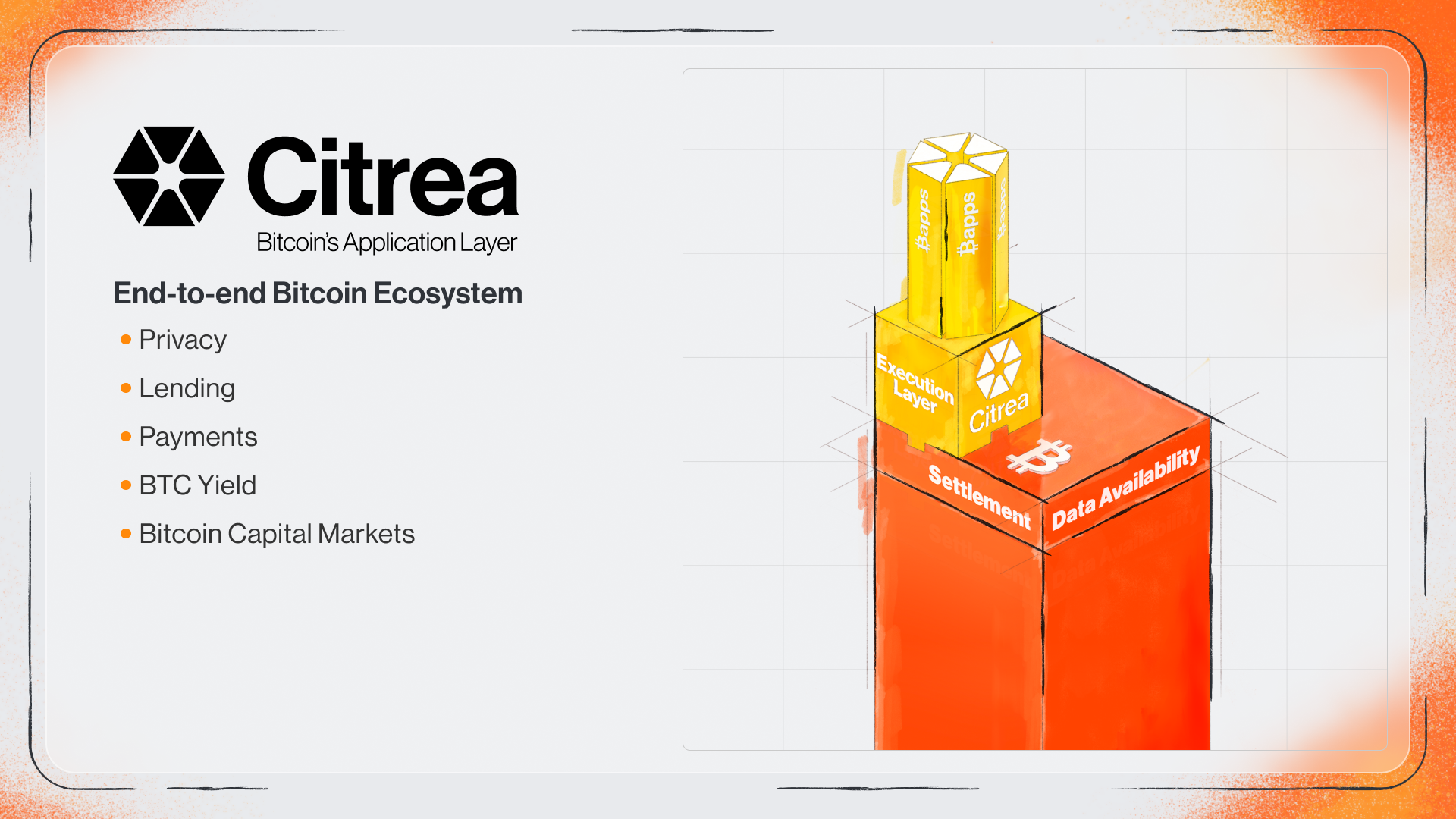
Bitcoin’s application layer, Citrea, launched its mainnet, expanding Bitcoin’s utility to privacy, lending, BTC yields, and more.
Past efforts to build a Bitcoin ecosystem were forced to sacrifice programmability or rely on heavy trust assumptions that limited adoption. Citrea marks a new beginning: an end-to-end Bitcoin ecosystem that relies solely on the Bitcoin Network as its source of truth.
Citrea enables:
cBTC: The first trust-minimized Bitcoin on a fully programmable platform.
ctUSD: A native stablecoin for Bitcoin, allowing for unified liquidity.
Bitcoin Capital Markets bringing demand, and utility to the Bitcoin Network.


