- Unchained Daily
- Posts
- Weekly Recap: BitGo’s Wall Street Debut, NYSE Goes Onchain
Weekly Recap: BitGo’s Wall Street Debut, NYSE Goes Onchain
Plus: lawmakers slow down market structure talks, regulators show rare unity, Farcaster changes hands, debanking returns to the spotlight, and more.

Juan Aranovich
January 24, 2026
Today’s newsletter is brought to you by Fuse!

FUSE ENERGY HITS A $5B VALUATION FOLLOWING A $70M SERIES B
Fuse Energy is a $400M ARR utility powering 200,000+ homes, and has recently announced a $70M series B at a blockbuster $5B valuation.
This comes after the recent beta launch of The Energy Network, a new digital layer engineered to scale our grids and save billions in costs.
And now, it’s just building momentum:
$170M raised to date
$5B valuation
Beta live on Solana
Landmark SEC no-action letter secured
Planning listings for early 2026
A new foundation for the grid is coming.
Check out their announcement here and follow Fuse on X for updates.
Good Saturday to the Unchained community!
Here’s what happened in crypto this week (yes, besides the rollercoaster in the markets)
🏛️ BitGo rings the bell as crypto IPOs return to Wall Street
🔗 NYSE moves toward tokenized stocks and 24/7 trading
⏳ Senate delays crypto market structure bill as focus shifts
🤝 SEC and CFTC signal unified approach under new leadership
🧵 Farcaster founders step aside as Neynar takes control
🏦 Trump sues JPMorgan, reigniting debanking debate
🔄 Paradex rolls back blockchain after $0 bitcoin glitch
📉 Trove token collapses after last-minute pivot and fund questions
⚠️ Ethereum transactions hit record highs amid scam surge

BitGo rings the bell as crypto IPOs return to Wall Street
BitGo IPO Opens Door for New Wave of Crypto Listings
Crypto custody firm BitGo made its public market debut on the New York Stock Exchange, reaching a $2.59 billion valuation after its shares climbed 24.6% in early trading. The stock opened at $22.43, well above its $18 offer price, as BitGo and several backers sold 11.8 million shares, raising $212.8 million.
Founded in 2013, BitGo is among the few crypto firms reporting sustained profitability, posting $35.3 million in net income during the first nine months of 2025. The company has positioned itself as a regulated digital asset infrastructure provider, offering custody and security services rather than relying on token issuance. Analysts described the listing as 2026’s first major test of investor appetite for crypto IPOs, following a slowdown in public offerings late last year.
Meanwhile, Ondo Finance released tokenized versions of BitGo’s newly listed stock on Ethereum, Solana and BNB Chain shortly after its NYSE debut, allowing non-U.S. investors to buy shares using stablecoins without traditional brokerage access.
In related news, hardware wallet maker Ledger is weighing a U.S. IPO that could value the company above $4 billion, according to reports. The discussions follow a surge in crypto hacks during 2025, when more than $3 billion was stolen, driving increased demand for offline self custody solutions. Ledger reported a record year in revenue, reaching hundreds of millions of dollars, as more users moved assets off exchanges.
Last but not least, CertiK, a Web3 cybersecurity firm founded in 2018, is exploring an IPO aiming to become the first public Web3 security company, after a 2022 fundraising valued it at $2 billion, according to co-founder Ronghui Gu.
NYSE moves toward tokenized stocks and 24/7 trading
NYSE Advances Tokenized Securities Platform for Always On Trading
The New York Stock Exchange is developing a tokenized securities trading platform designed to support 24/7 trading and onchain settlement of U.S. equities and exchange traded funds, pending regulatory approval.
The initiative would allow round the clock trading, fractional share purchases, dollar denominated orders, and instant settlement using tokenized capital, including stablecoin based funding.
According to the exchange, the system will combine its Pillar matching engine with blockchain based post trade infrastructure and support multiple blockchains for settlement and custody.
Tokenized shares would remain fungible with traditionally issued securities, with holders retaining the same dividend and governance rights as existing shareholders. Access would be provided to qualified broker dealers on a non discriminatory basis.
The project is part of a broader digital strategy by Intercontinental Exchange, which is also working with BNY Mellon and Citigroup to enable tokenized deposits across clearing systems.
Senate delays crypto market structure bill as focus shifts
Senate Delays Market Structure Bill as Crypto Policy Advances Elsewhere
Efforts to pass a comprehensive U.S. crypto market structure bill have slowed after the United States Senate Banking Committee shifted its attention to housing affordability, a legislative priority ahead of upcoming elections.
According to reports, the bill is now unlikely to return until late February or March, marking its second delay in recent months.
Momentum was weakened after Coinbase withdrew its support from the draft legislation, complicating negotiations among lawmakers.
Despite the pause, crypto regulation efforts continue on parallel tracks. The United States Senate Agriculture Committee has released an updated market structure proposal and scheduled it for markup, with provisions that would expand the authority of the Commodity Futures Trading Commission.
Meanwhile, Donald Trump said this week he expects to sign a comprehensive crypto bill soon, signaling continued executive branch interest. While progress has slowed, lawmakers remain engaged across multiple legislative paths.

SEC and CFTC signal unified approach under new leadership
SEC and CFTC Present Unified Crypto Strategy
U.S. regulators signaled closer coordination on digital asset oversight as the Securities and Exchange Commission and the Commodity Futures Trading Commission announced a joint crypto policy event scheduled for next week in Washington.
The appearance will feature SEC Chair Paul Atkins and newly confirmed CFTC Chair Mike Selig, marking their first public presentation together since both agencies came under Trump-appointed leadership.
In a joint statement, the regulators said market participants have faced unclear and overlapping rules, adding that increased cooperation is intended to address long-standing jurisdictional confusion.
“Market participants have been forced to navigate regulatory boundaries that are unclear in application and misaligned in design,” Atkins and Selig said.
Selig previously worked on crypto policy at the SEC before moving to lead the CFTC, replacing interim chair Caroline Pham.
The event comes as Congress continues debating a crypto market structure bill that would formally define each agency’s role, while regulators move ahead with coordination efforts of their own.

Farcaster founders step aside as Neynar takes control
Neynar Takes Control as Farcaster Founders Step Aside
Crypto social protocol Farcaster is entering a new phase after being acquired by Neynar, with its founders stepping back from daily operations. Co-founder Dan Romero announced that Neynar will assume control of the Farcaster protocol, including its smart contracts, mobile app, developer tools, and the Clanker AI token launchpad. Romero and co-founder Varun Srinivasan will exit active development roles at Merkle Manufactory.
Farcaster raised $150 million in 2024 from major investors including Paradigm and Andreessen Horowitz, but struggled to maintain long-term user growth. “This wasn’t an easy decision,” Romero said, adding that the project needed “a new approach and leadership.”
Following the sale, Merkle Manufactory plans to return $180 million to investors. Romero emphasized that Farcaster will continue operating under Neynar, which plans to introduce a new builder-focused roadmap as crypto social platforms consolidate.
Trump sues JPMorgan, reigniting debanking debate
Trump Lawsuit Revives Debanking Debate Amid Crypto Banking Tensions
President Donald Trump has filed a lawsuit against JPMorgan Chase and its CEO Jamie Dimon, alleging the bank improperly terminated several accounts linked to Trump affiliated businesses in February 2021. The suit was filed in Miami-Dade County, Florida, and claims the accounts were closed “without warning or remedy.”
According to the complaint, entities including hospitality and golf related limited liability companies argue the closures were driven by political and social motivations. Trump’s lawyers said the bank acted because it believed “the political tide at the moment favored doing so.”
The case has renewed attention on debanking, a term frequently raised by the crypto industry, where firms have long complained about losing access to U.S. banking services. Since Trump took office, regulators including the Federal Reserve, Office of the Comptroller of the Currency, and Federal Deposit Insurance Corporation have pledged to stop factoring reputational risk into bank supervision.
In a statement, JPMorgan said it “does not close accounts for political or religious reasons”, adding that closures occur due to legal or regulatory risk and calling for changes to existing banking rules.

Paradex rolls back blockchain after $0 bitcoin glitch
Paradex Executes Rare Rollback After Pricing Error Triggers Liquidations
Decentralized derivatives exchange Paradex carried out a blockchain rollback after a technical failure briefly showed bitcoin priced at $0, triggering mass liquidations of leveraged positions.
The incident occurred following routine database maintenance, when incorrect pricing data propagated across the platform before values quickly returned to normal.
Paradex later confirmed the issue stemmed from a database migration error and said the rollback restored the system to its last known correct state.
The exchange stated that user funds are safe, though it did not disclose how many traders were affected or the total value of liquidated positions. Parts of the platform were temporarily restricted while engineers completed recovery work.
Rollbacks remain rare in crypto markets, as they reverse confirmed transactions, and the event has renewed scrutiny around exchange safeguards, technical control, and market reliability as decentralized trading platforms continue to scale.
Trove token collapses after last-minute pivot and fund questions
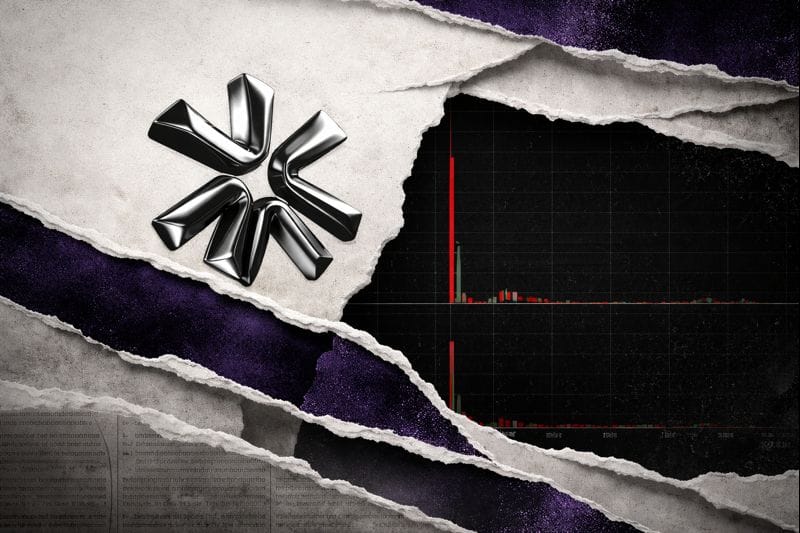
Trove Token Collapses After Late Pivot and Fund Use Allegations
Investor confidence in Trove Markets unraveled this week after the project’s token launch was followed by a sharp price collapse and mounting questions about its handling of funds. The TROVE token fell roughly 98%, dropping from a market value of about $21 million to $330,000 shortly after trading began.
The fallout followed a last minute decision to abandon plans to build on Hyperliquid and instead pivot development to Solana. Trove had raised more than $11 million in a public token sale tied to its original Hyperliquid based roadmap. The shift came after a liquidity partner reportedly exited, removing access to required infrastructure.
Trove’s anonymous developers said they have refunded just over $2.4 million to early investors and will retain $9.4 million to continue development. Allegations have also surfaced regarding undisclosed influencer promotions and potential misuse of funds, including claims raised by blockchain investigator ZachXBT. Trove said it is continuing operations and denied plans to shut down.

Ethereum transactions hit record highs amid scam surge
Scam Activity Drives Record Spike in Ethereum Transactions
The Ethereum network recorded a new daily transaction high on January 16, surpassing 2.8 million transactions, according to BitInfoCharts data. At the same time, new Ethereum addresses created over a 30 day period reached 12.6 million, the highest rolling total on record, based on Etherscan figures.
However, security researchers say the surge was largely driven by mass address poisoning attacks, a scam technique where attackers send small amounts of crypto from lookalike wallet addresses to trick victims into misdirecting funds.
Blockchain security firm Cyvers reported detecting more than one million poisoning attempts per day in recent weeks.
Experts note that lower transaction costs following Ethereum’s December Fusaka upgrade have made these attacks cheaper and easier to execute.
FUSE ENERGY HITS A $5B VALUATION FOLLOWING A $70M SERIES B
Fuse Energy is a $400M ARR utility powering 200,000+ homes, and has recently announced a $70M series B at a blockbuster $5B valuation.
This comes after the recent beta launch of The Energy Network, a new digital layer engineered to scale our grids and save billions in costs.
And now, it’s just building momentum:
$170M raised to date
$5B valuation
Beta live on Solana
Landmark SEC no-action letter secured
Planning listings for early 2026
A new foundation for the grid is coming.
Check out their announcement here and follow Fuse on X for updates.
If You Like Unchained:
🎧 Subscribe on YouTube, Apple Podcasts, Spotify, or wherever you get your podcasts!