- Unchained Daily
- Posts
- WLFI Moves to Bring USD1 Under Federal Banking Oversight
WLFI Moves to Bring USD1 Under Federal Banking Oversight
Plus: 👟 Nike exits NFTs with RTFKT sale, 📱 Solana Mobile sets SKR launch, 🧱 Ethereum boosts blob capacity, ⚠️ Sei warns on USDC.n risk.

Juan Aranovich
January 08, 2026

Hi! In today’s edition:
🏦 WLFI applies for a U.S. bank charter to custody USD1
👟 Nike sells RTFKT, ending its NFT push
📱 Solana Mobile confirms Jan. 21 SKR token launch
🧱 Ethereum completes Fusaka blob parameter upgrades
⚠️ Sei warns USDC.n could become inaccessible after March
🎙️ Bitcoin, geopolitics, and the fallout from Maduro’s capture
Today’s newsletter is brought to you by Figure!
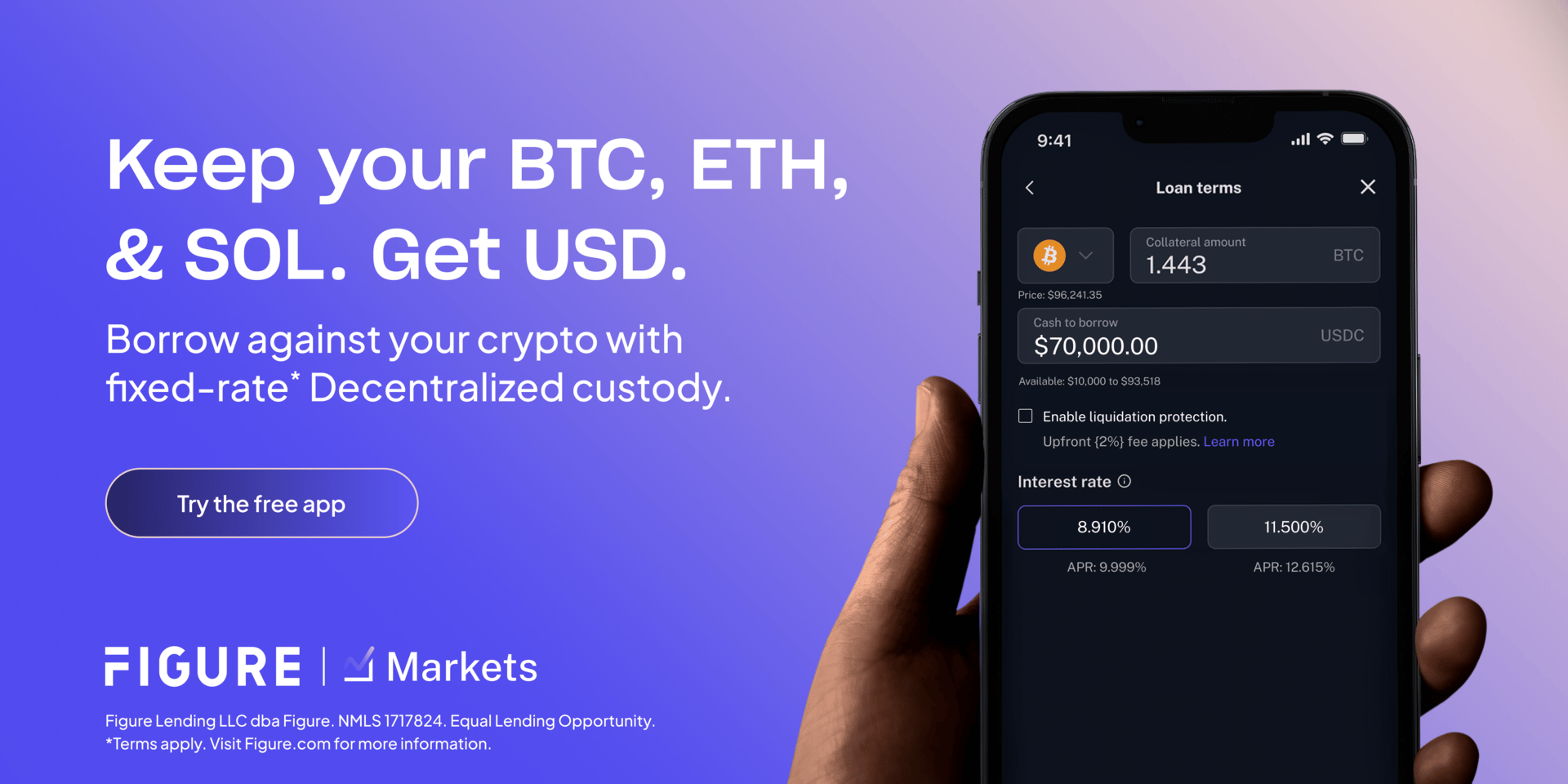
We all know the mantra: Not your keys, not your coins. But managing self-custody while trying to access leverage is a headache.
Figure bridges this gap for their Crypto Backed Loans with decentralized MPC custody. Your assets sit in a segregated wallet where you retain ownership—no opaque "commingled funds" risks here.
They are also tackling the biggest anxiety in lending: flash crashes. Their Liquidation Protection for BTC and ETH specifically protects you from getting wiped out during large price drops.
You get the best of both worlds:
Safety: Institutional-grade MPC custody.
Access: Borrow at just 8.91% on Crypto Backed Loans.
Yield: Earn up to 9% APY on cash, backed by real-world assets (HELOCs) with Democratized Prime.
Sleep better knowing your assets (and your upside) are protected.

By Tikta
WLFI Seeks Bank Charter to Custody USD1 Stablecoin
World Liberty Financial (WLFI), backed by President Donald Trump and his family, has applied for a U.S. national trust bank charter to integrate its USD1 stablecoin operations under a single entity.
The proposed World Liberty Trust Company National Association (WLTC) would take charge of issuance, custody, and redemption under federal oversight through the Office of the Comptroller of the Currency (OCC).
BitGo, which has custodied USD1 since its launch, will continue as a strategic partner as WLTC becomes fully operational.
Launched in March 2025, USD1 has grown to $3.3 billion in circulation, and sits among the fastest growing stablecoins in history.
Nike Sold RTFKT to Undisclosed Buyer in December: Report
Nike’s NFT experiment has officially come to an end, with the footwear giant selling its digital collectibles studio RTFKT to an undisclosed buyer.
The transaction, which reportedly took place on Dec. 16 2025, was first reported by The Oregonian. Nike did not reveal the terms of the sale or the buyer, but said the sale marks a “new chapter for the company and its community.”
Nike acquired RTFKT in 2021 at the height of the NFT boom, positioning the studio as a cornerstone of its push into Web3, digital fashion, and virtual collectibles.
Since then, sales across the NFT sector have significantly declined. In March 2025, RTFKT NFT holders filed a class action lawsuit against Nike, alleging that Nike's shutdown of RTFKT in December 2024 destroyed the value of the digital assets it once promoted.
Solana Mobile Confirms SKR Token Launch Date
Solana Labs subsidiary Solana Mobile confirmed the launch of its native ecosystem token SKR will take place on Jan. 21.
“The first ever Seeker Season has concluded, with over 265 dApps, 9 million transactions, and $2.6 billion in volume. Thank you to the 100,000+ Seekers who participated,” said the Solana Mobile team.
The event will airdrop 20% of the total 10 billion token supply — about 2 billion SKR — to eligible Seeker phone users and developers, based on a completed snapshot.
The token enables staking to "Guardians" for network security, governance, and exclusive app access.
Ethereum’s Latest BPO Fork Completes Fusaka Upgrade’s Parameter Tweaks
Ethereum has hit another key milestone in its scalability roadmap with the Fusaka upgrade's final Blob Parameters Only (BPO) fork.
“Instead of waiting for a major annual upgrade to adjust network capacity, BPO forks allow Ethereum to tune specific parameters (like blob targets) independently and efficiently,” said Ethereum in an X post.
The second and final BPO fork raised the maximum blobs per block from 15 to 21 and the target from 10 to 14, completing the Fusaka upgrade's parameter-only adjustments.
The change enhances data availability for rollups without a full hard fork, and could bring down layer 2 fees by up to 60% from current levels.
Sei Network Warns USDC.n Could Become ‘Inaccessible’ After March
Sei Network issued a warning to holders of USDC.n tokens, urging them to swap for native USDC ahead of a major upgrade planned for March.
USDC.n is a bridged version of Circle's USDC stablecoin on the Sei Network, originally issued on the Noble appchain and enables interoperability in ecosystems like Cosmos.
The SIP-3 upgrade, scheduled for the mainnet in March, will transition Sei to an EVM-only chain, meaning it will no longer support Cosmos-native assets like USDC.n.
“After this upgrade, USDC.n may become inaccessible or lose its value on the Sei Network,” said the Sei team in a statement.
The team urged holders to use tools like DragonSwap or Symphony to swap small amounts, and Brr to migrate larger volumes through Circle's Cross-Chain Transfer Protocol (CCTP).
How Maduro’s Capture and a ‘Pre-War World’ Affects Bitcoin: Bits + Bips
After the U.S. captured Venezuela’s president, markets moved fast, but crypto moved first. Here’s what it tells us about power, policy, and the next global regime.
In this episode of Bits + Bips, hosts Austin Campbell, Ram Ahluwalia, and Chris Perkins are joined by macro strategist Peter Tchir to unpack one of the most consequential geopolitical events in years: the U.S. capture of Venezuelan President Nicolás Maduro.
The conversation explores why Bitcoin surged past $94,000, what the operation signals about U.S. power and strategy, and how investors should think about energy, supply chains, and national security in a shifting global order.
The group also debates whether crypto’s 24/7 markets are revealing a structural weakness in traditional finance, whether Latin America is poised for an investment renaissance, and why “production for security” may replace ESG as the dominant investment framework.
Listen to the episode on Apple Podcasts, Spotify,Pods, Fountain, Podcast Addict,Pocket Casts, Amazon Music, or on your favorite podcast platform.

🧑💻 The entire Electric Coin Company team behind the privacy-focused Zcash blockchain resigned after a governance dispute with its nonprofit board, with the developers now forming a new company—leaving uncertainty around Zcash’s future direction despite the protocol itself continuing to operate.
📜 The Senate Agriculture Committee plans to vote next week on crypto market structure legislation alongside the Banking Committee, a key step toward defining how U.S. regulators split oversight of digital assets amid time pressure and unresolved political disputes.
🏦 JPMorgan expanded its bank-issued JPM Coin onto the Canton blockchain, extending its deposit-backed digital dollar beyond Base and into a network backed by major financial institutions to enable faster, privacy-configurable settlement for large corporate clients.
🌐 Ethereum co-founder Vitalik Buterin compared Ethereum to both BitTorrent and Linux, arguing the network is designed to combine mass-scale decentralization with enterprise-grade trust by serving as an open financial and infrastructure layer that operates without middlemen.
🍋 Prosecutors appealed a judge’s dismissal of fraud claims tied to the Mango Markets exploit, arguing the court wrongly ruled that clicking a “borrow” button created no repayment obligation despite user guides describing interest and collateral requirements.
🎥 Video platform Rumble launched a built-in, non-custodial crypto wallet developed with Tether and MoonPay, allowing creators to receive tips in bitcoin and Tether tokens as part of its push to blend creator monetization with crypto payments.
🏛️ FINRA added former CFTC chair Rostin Behnam and Robinhood’s top lawyer Dan Gallagher to its board, bringing two influential crypto policy voices into the body that oversees U.S. brokerage firms and shapes industry rules.
🚔 Cambodian authorities arrested and deported Prince Group founder Chen Zhi to China following a joint investigation, as U.S. prosecutors pursued a record $15 billion bitcoin seizure tied to alleged forced-labor scam operations that defrauded victims through crypto romance schemes.

🤝 Polymarket entered an exclusive partnership with Dow Jones Media to feed its prediction-market data into publications like The Wall Street Journal and Barron’s, bringing crowd-based probability signals into mainstream financial reporting.

🧾 Fireblocks acquired crypto accounting startup TRES for about $130 million, adding audit-ready financial reporting to its custody and transfer tools as it works toward becoming an all-in-one operating system for institutions using blockchain.